
 Back to News & Insights
Estimated read time: 6 minutes
The quick take
VO₂ max is the maximum oxygen your body can use during intense exercise. Higher VO₂ max = better endurance and a strong indicator of heart-lung fitness and long-term health. A lab test with a mask on a treadmill or bike gives you a precise number and personal training zones. With structured training, most people can improve VO₂ max meaningfully in 8–12 weeks.
What VO₂ Max Actually Measures
- Expressed as ml of oxygen per kg body weight per minute (ml/kg/min).
- Reflects your whole system: heart output, lung function, blood delivery, and the muscles’ mitochondria using oxygen.
- Two people with the same VO₂ max can still perform differently—economy and threshold also matter—which is why testing + coaching beats one number alone.
Why It Matters (for Athletes and Health)
- Endurance performance: Sets the ceiling for how hard you can go aerobically.
- Cardiometabolic health: Higher VO₂ max is strongly associated with lower risk of cardiovascular disease and all-cause mortality.
- Everyday capacity: Climbing stairs, hiking, long workdays—higher VO₂ max makes life feel easier.
How Lab Testing Works
- Protocol: Progressive treadmill or bike test where intensity increases every 1–3 minutes.
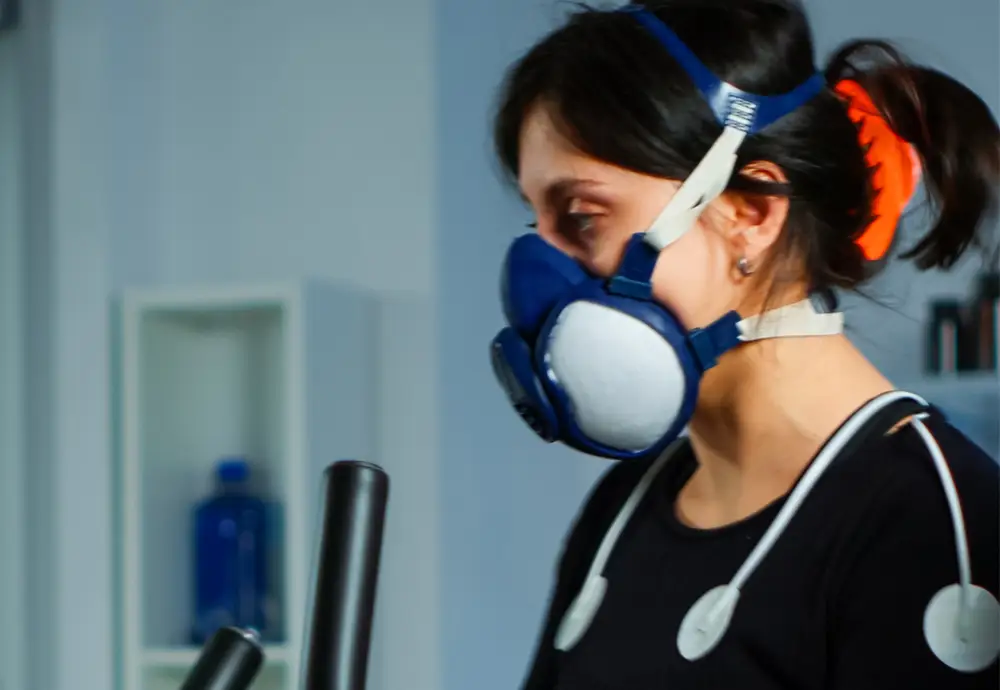
- Equipment: You wear a mask; the system measures oxygen in vs. carbon dioxide out.
- What you get:
- VO₂ max (ml/kg/min)
- Training zones (easy/tempo/threshold/VO₂ intervals)
- Heart-rate, pace or power targets
- Breathing and efficiency insights
- Duration: ~10–15 minutes of effort; supervised for safety and data quality.
What’s a “Good” VO₂ Max?
Use these very general adult benchmarks as a starting point—age, sport, and sex matter:
| Category | VO₂ max (ml/kg/min) |
|---|---|
| Low | < 30 |
| Fair | 30–39 |
| Good | 40–49 |
| Excellent | 50–59 |
| Elite | 60+ |
For many women, subtract ~5–10 ml/kg/min from the bands above; for older adults, expect lower values. Your trend and zones are more actionable than the label.
How to Improve Your VO₂ Max (8–12 Week Template)
1) Aerobic base (Zone 2)
- 2–4 sessions/week, 45–90 minutes conversational effort
- Builds mitochondria and recovery capacity
2) Threshold work
- 1–2 sessions/week, 2×8–20 minutes at your tested lactate/ventilatory threshold
- Raises the “speed you can sustain”
3) VO₂ max intervals
- 1 session/week, choose one:
- 3–5 × 3–5 min hard (90–100% vVO₂max) with equal easy recoveries
- 10–16 × 30s hard / 30s easy
- Short, controlled, high quality
4) Strength training
- 2×/week total-body (squats/hinge/push/pull/carry)
- Improves economy and resilience
5) Recovery & fueling
- Easy days easy; sleep 7–9 hours; protein ~0.7–1.0 g/lb body weight/day; monitor iron if prone to deficiency.
Re-test cadence: Every 8–12 weeks to update zones and confirm progress.
Common Mistakes
- All hard, no easy: Chronic gray-zone training stalls progress.
- Randomness: No progression in volume or intensity.
- Under-fueling: Low glycogen = low quality sessions.
- Relying on watch estimates: Useful for trends, not prescriptions—lab data wins.
FAQs
Do I need to be a runner?
No. We test on treadmill or bike (your choice). Cyclists and runners can both get sport-specific zones.
Is it uncomfortable?
The last few minutes are tough by design, but the test is short and supervised.
How often should I test?
Every 8–12 weeks or at the start/end of a training block.
Can breathing training help?
If your test shows ventilatory limitations, targeted breathing drills can complement your program.